
Cauda Equina Syndrome: Symptoms and Treatment
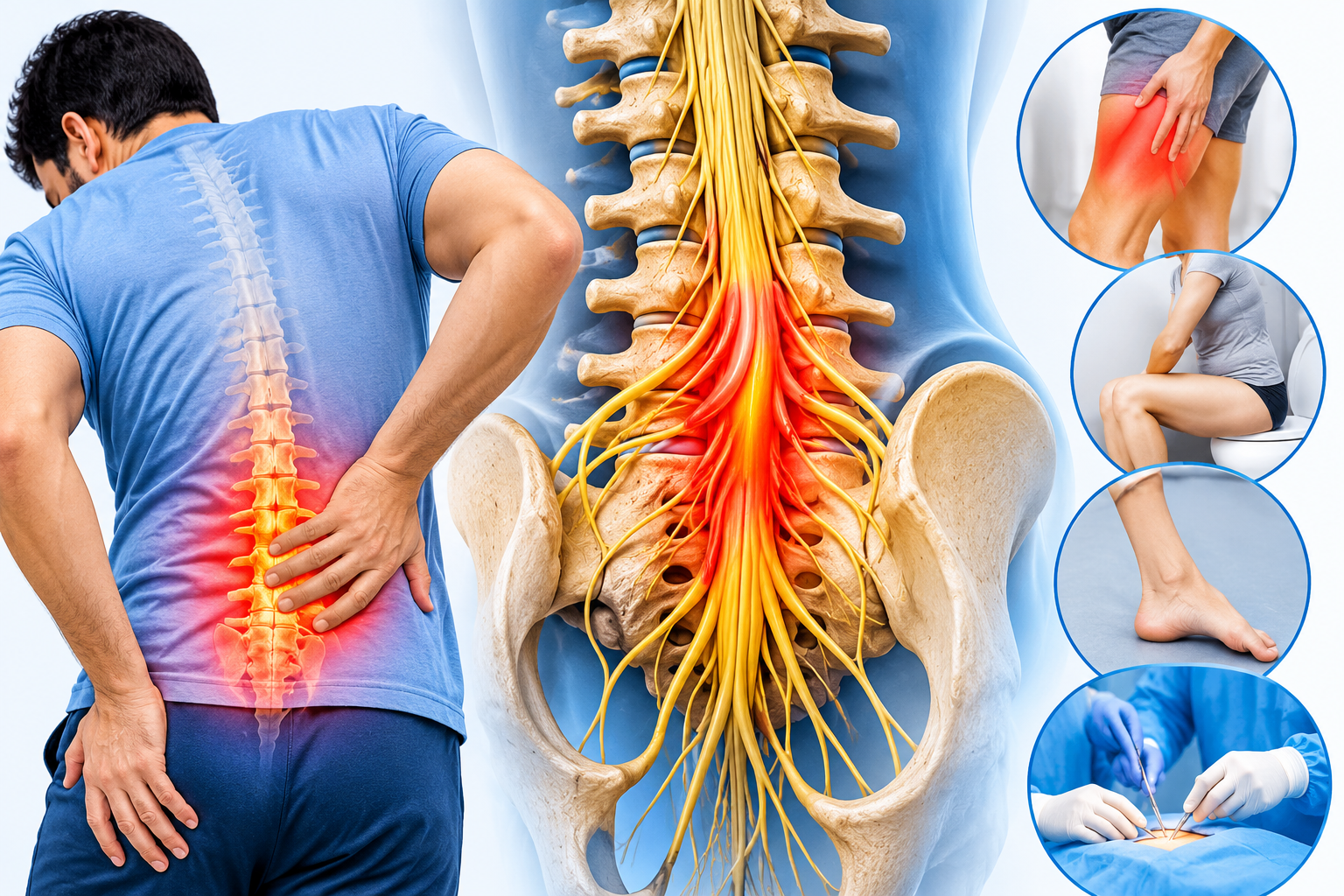
Cauda equina syndrome is a serious neurological condition caused by compression of the bundle of nerve roots located at the lower end of the spinal cord. These nerves control important functions involving the legs, bladder, bowel and sensation around the pelvic region.
The condition is considered a medical emergency because prolonged compression can lead to permanent nerve damage. Recognizing the warning signs and obtaining immediate medical attention are essential for protecting neurological function.
Common Causes
Cauda equina syndrome can develop due to several conditions that compress the lower spinal nerve roots.
Common causes include:
- Large lumbar disc herniation.
- Severe narrowing of the spinal canal.
- Spinal injuries or fractures.
- Spinal tumours.
- Infections or abscesses near the spinal canal.
- Bleeding within or around the spinal canal.
- Complications following certain spinal procedures.
A large herniated disc in the lower back is one of the most common causes.
Warning Signs and Symptoms
Symptoms may develop suddenly or progress over time. Important warning signs include:
- Severe lower back pain.
- Pain radiating into one or both legs.
- Numbness around the groin, buttocks or inner thighs.
- Difficulty starting urination.
- Loss of bladder control or urinary retention.
- Loss of bowel control.
- Weakness in one or both legs.
- Reduced sensation in the pelvic region.
- Sexual dysfunction.
New bladder or bowel dysfunction, saddle numbness or progressive leg weakness requires immediate emergency medical assessment. Do not wait for symptoms to improve on their own.
How Is Cauda Equina Syndrome Diagnosed?
Rapid diagnosis is essential to identify the source and severity of nerve compression.
1. Neurological Examination
The specialist evaluates leg strength, sensation, reflexes and other neurological functions.
2. MRI Lumbar Spine
An urgent MRI is generally the preferred imaging investigation to identify compression of the cauda equina nerve roots.
3. Bladder Assessment
A bladder scan may be used to measure the amount of urine remaining after urination.
4. Additional Investigations
Other tests may be recommended depending on the suspected cause, such as infection, tumour or spinal injury.
Treatment Options
Cauda equina syndrome usually requires urgent treatment to relieve pressure on the affected nerves.
1. Emergency Surgical Decompression
When nerve compression is confirmed and requires intervention, emergency surgery may be performed to relieve pressure. The exact procedure depends on the underlying cause.
2. Treatment of the Underlying Condition
If compression is caused by a tumour, infection or another spinal disorder, additional treatment may be necessary.
3. Post-Surgical Monitoring
After treatment, neurological function, bladder and bowel function, and leg strength are monitored carefully.
4. Rehabilitation
Physiotherapy and rehabilitation may help improve mobility, muscle strength and functional independence. Some patients may require additional bladder or bowel management support.
Why Immediate Treatment Is Important
The nerves affected in cauda equina syndrome are responsible for several essential body functions. Delayed treatment can increase the risk of permanent bladder, bowel, sexual and lower-limb problems.
Urgent specialist evaluation and timely treatment provide the best opportunity to prevent further nerve damage, although recovery varies between patients.
Conclusion
Cauda equina syndrome is a serious spinal emergency that requires immediate medical attention. Recognizing symptoms such as saddle numbness, urinary difficulties, bowel dysfunction and leg weakness can help patients seek treatment without delay.
Dr. Yogesh Agrawal, a Neurosurgeon with MBBS, MS (General Surgery) and MCh (Neuro Surgery) qualifications, specializes in brain and spine surgery, spinal disorders, injuries and complex neurosurgical procedures. Prompt neurosurgical evaluation is essential when symptoms suggest severe spinal nerve compression.
Frequently Asked Questions
1. Is cauda equina syndrome a medical emergency?
Yes. It is a medical emergency because compression of the lower spinal nerve roots can cause permanent neurological damage.
2. What is the most common cause of cauda equina syndrome?
A large herniated lumbar disc is one of the most common causes, although tumours, injuries, infections and other conditions can also lead to it.
3. Can cauda equina syndrome cause bladder problems?
Yes. It can cause difficulty passing urine, urinary retention or loss of bladder control.
4. Does cauda equina syndrome require surgery?
Many cases with confirmed significant nerve compression require urgent surgical decompression. Treatment depends on the cause and clinical findings.
5. Can patients recover after surgery?
Recovery varies according to the severity and duration of nerve compression. Some patients improve significantly, while others may have lasting symptoms and require rehabilitation.
Dr. Yogesh Agrawal