Lumbar Spinal Stenosis: Causes and Treatment
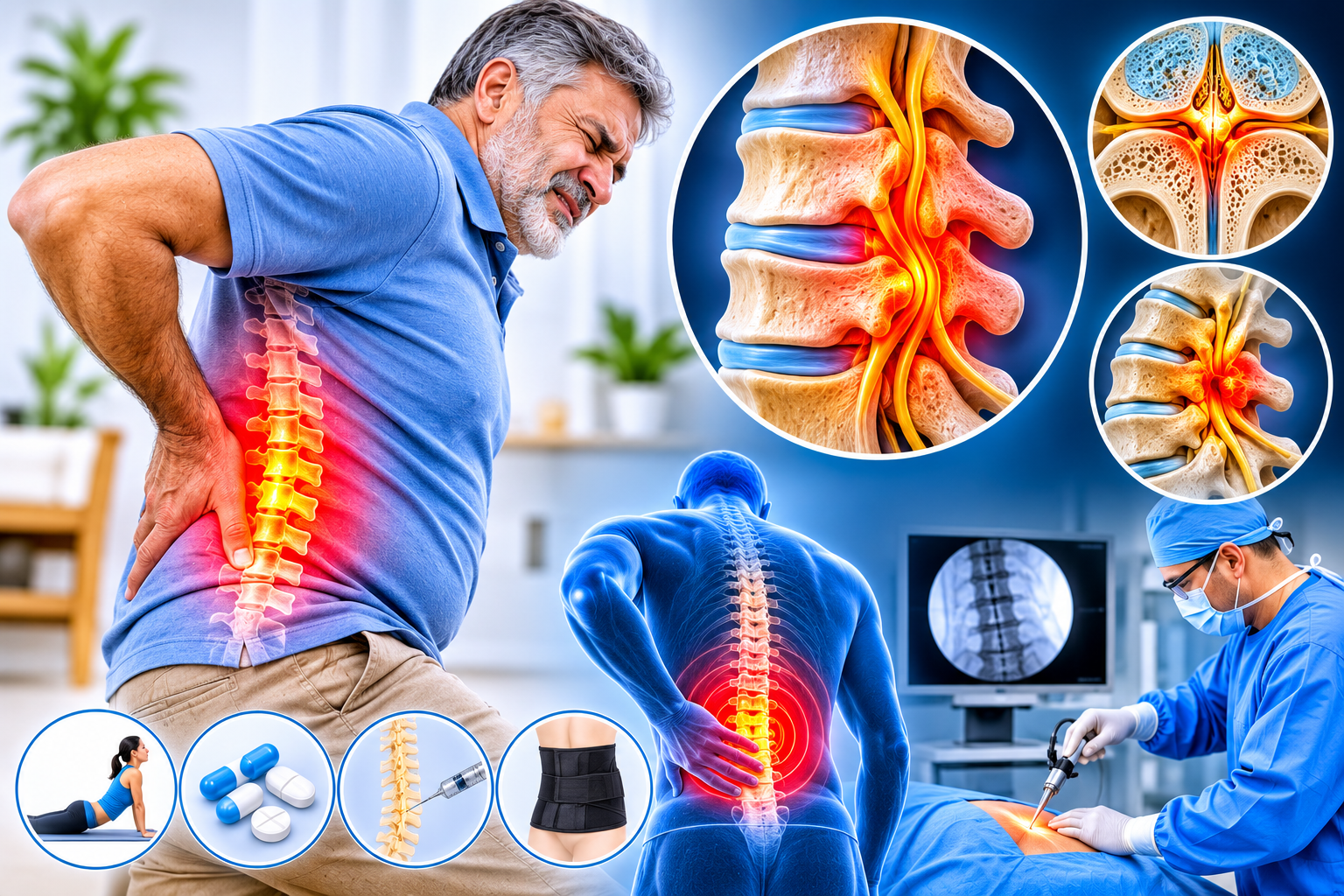
Lumbar spinal stenosis is a condition in which the spinal canal in the lower back becomes narrower, putting pressure on the nerves that travel through the spine. It commonly develops due to age-related changes, such as thickening of ligaments, enlargement of joints and degenerative changes in the spinal structures.
The condition may cause lower back pain, numbness, tingling or weakness in the legs. Some patients experience discomfort while standing or walking, which may improve when sitting or leaning forward.
Early diagnosis is important to understand the extent of nerve compression and select an appropriate treatment approach.
Common Causes of Lumbar Spinal Stenosis
Several factors can contribute to narrowing of the spinal canal:
- Age-related degeneration of spinal joints.
- Thickening of spinal ligaments.
- Bulging or herniated intervertebral discs.
- Bone spurs affecting the spinal canal.
- Degenerative changes in the vertebrae.
- Previous spinal injuries or surgeries.
- Congenital narrowing of the spinal canal.
Symptoms of Lumbar Spinal Stenosis
Symptoms may develop gradually and vary between individuals.
Common symptoms include:
- Persistent lower back discomfort.
- Pain spreading from the lower back into the legs.
- Numbness or tingling in the legs and feet.
- Weakness in the lower limbs.
- Pain or heaviness while standing for long periods.
- Difficulty walking longer distances.
- Relief when sitting or bending forward.
In severe cases, spinal nerve compression can affect bladder or bowel control. New loss of bladder or bowel control, numbness around the groin or rapidly worsening leg weakness requires immediate emergency medical assessment.
How Is Lumbar Spinal Stenosis Diagnosed?
A specialist may recommend the following evaluations:
1. Medical History: Understanding the patient's symptoms, walking limitations and medical background.
2. Neurological Examination: Checking muscle strength, reflexes, sensation and walking ability.
3. MRI Scan: Helps identify spinal canal narrowing, nerve compression and soft tissue changes.
4. X-ray: May help assess spinal alignment, bone changes and instability.
5. CT Scan: Can provide detailed information about the bony structures when required.
Treatment Options
Treatment is selected according to symptom severity, nerve involvement and the patient's overall health.
1. Medication
Appropriate medications may be prescribed to manage pain and associated symptoms after medical assessment.
2. Physiotherapy
A supervised rehabilitation programme may include posture training, flexibility exercises, strengthening and movement guidance.
3. Activity Modification
Adjusting activities that aggravate symptoms and maintaining suitable physical activity may help improve daily function.
4. Injection-Based Treatment
In selected cases, specialist-guided injections may be considered for symptom relief. Their suitability and potential benefits vary between patients.
5. Surgical Treatment
When symptoms are severe, progressive or do not improve with appropriate conservative treatment, surgery may be recommended. A procedure called lumbar decompression aims to relieve pressure on the affected nerves. Spinal fusion may be considered in selected cases when instability is also present.
Tips for Maintaining Spine Health
- Maintain a healthy body weight.
- Avoid prolonged positions that increase discomfort.
- Follow suitable strengthening exercises.
- Maintain correct posture during daily activities.
- Avoid lifting heavy objects incorrectly.
- Consult a specialist if leg pain, numbness or weakness persists.
Conclusion
Lumbar spinal stenosis can affect mobility, walking ability and quality of life due to pressure on the nerves in the lower spine. Accurate diagnosis and timely treatment can help manage symptoms and prevent avoidable complications.
Dr. Yogesh Agrawal is a Neurosurgeon specializing in brain and spine surgery, including the management of spinal disorders, nerve compression and complex neurosurgical conditions. A personalized treatment plan can help determine whether conservative management or surgical intervention is appropriate.
Frequently Asked Questions
1. What is the main cause of lumbar spinal stenosis?
Age-related degeneration of the spine is a common cause, although congenital narrowing and previous injuries can also contribute.
2. Can lumbar spinal stenosis cause leg pain?
Yes. Pressure on the spinal nerves can cause pain, tingling, numbness or weakness in one or both legs.
3. Is walking good for lumbar spinal stenosis?
Suitable physical activity may help maintain mobility, but walking tolerance varies. A healthcare professional can recommend appropriate exercises and activity levels.
4. Does lumbar spinal stenosis always require surgery?
No. Many patients can initially be managed with non-surgical treatments. Surgery may be considered when symptoms are severe, progressive or persistent.
5. When should I consult a neurosurgeon?
Consult a specialist if you experience persistent back pain, leg weakness, numbness or difficulty walking. Sudden bladder or bowel dysfunction or saddle numbness requires emergency assessment.
Dr. Yogesh Agrawal